GeckoTerminal | Real-Time DEX Intelligence for Eclipse

GeckoTerminal (https://www.geckoterminal.com/eclipse/pools) is a real-time decentralized exchange (DEX) tracker that monitors over 10 million tokens across 240+ blockchain networks, including emerging L2s like Eclipse. Built by the team behind CoinGecko, it provides traders, analysts, and developers with instant access to price movements, liquidity shifts, and transaction flows — all extracted directly from on-chain data.
As Eclipse expands its modular DeFi stack, GeckoTerminal becomes a critical analytics layer, enabling users to track token launches, monitor liquidity pools, and identify trading opportunities across Eclipse-native protocols.
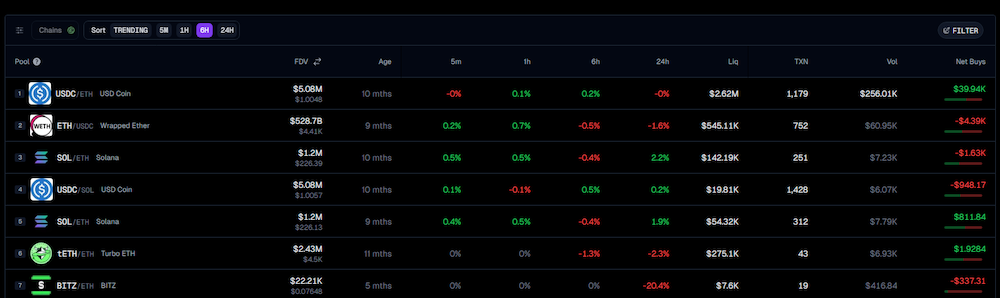
GeckoTerminal features and options
What GeckoTerminal Offers Eclipse
- 📊 Live price tracking – Monitor token prices and OHLCV charts in real time
- 💧 Liquidity insights – Track pool depth, swap paths, and volume trends
- 🔍 Protocol discovery – Surface trending tokens and new launches on Eclipse
- 📈 Trading signals – Identify whale movements and breakout patterns
- 🧩 Developer-ready API – Integrate live data into Eclipse-native dashboards and bots
- 🌐 Cross-chain visibility – Compare Eclipse tokens with activity on Solana, Base, Arbitrum, and more
Use Cases on Eclipse ecosystem
Real Use Cases on Eclipse
- 🚀 Launch tracking – Monitor new token pairs from Nova, Minty Market, and Sandglass
- 📊 Liquidity monitoring – Watch pool depth for protocols like Invariant and Lifinity
- 🧠 Alpha generation – Use GeckoTerminal to spot volume spikes and price reversals
- 📡 Bot integration – Feed real-time data into trading bots and alert systems
- 🧪 Protocol testing – Builders can validate token performance post-launch
Summary
GeckoTerminal brings transparency, speed, and precision to Eclipse’s DeFi ecosystem. As new protocols launch and liquidity grows, GeckoTerminal empowers users to:
- Track token performance in real time
- Discover emerging opportunities across Eclipse-native pools
- Build smarter dashboards, bots, and analytics tools
Its developer-friendly API and on-chain-first architecture make it a perfect fit for Eclipse’s modular vision — where every protocol, token, and user benefits from instant data access.