Next-Generation Dietitians and Nutritional Specialists | Strategic Health Professions in the Age of AI
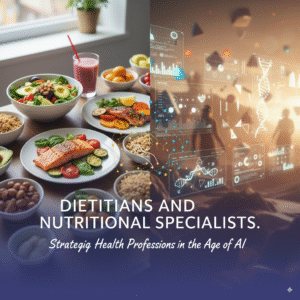
As society increasingly recognizes that lifestyle determines health more than pharmaceuticals alone, next-generation dietitians and nutritional specialists are emerging as strategic figures in human well-being. These professionals combine advanced nutritional science, metabolic optimization, and lifestyle coaching to restore and maintain body health. Unlike AI-driven apps or generalized dietary recommendations, personalized nutrition requires human insight into physiology, behavior, and social factors.
Advantages: high demand from healthcare systems, wellness-focused corporations, and individuals seeking preventative health; direct measurable impact on client health and performance.
Challenges: requires multidisciplinary expertise, continuous education to keep up with evolving nutrition science, and a strong ability to translate knowledge into personalized actionable plans.
Path to Entering the Profession
The fastest route involves obtaining a degree in nutrition, dietetics, or a related health science, followed by specialized certification in functional, sports, or clinical nutrition. Certification programs typically take 6–24 months post-degree, depending on the specialization. Licensing requirements vary by region: some countries require registration as a dietitian or nutritionist with a national health board, while others allow private practice with accredited certifications.
Advantages and disadvantages

PROS
• High societal impact: improved health outcomes and preventative care.
• Growing demand from healthcare, corporate wellness, and individual clients.
• Opportunities to integrate with digital health monitoring and AI-assisted analysis.
• Profession remains human-centric: AI cannot fully interpret individual metabolic responses or lifestyle contexts.

CONS
• Requires multidisciplinary expertise (nutrition science, behavioral psychology, biochemistry).
• Ongoing education is essential due to rapid developments in nutrition science.
• Licensing and accreditation vary widely by region.
• Income depends on client base, specialization, and type of practice.
Salary and revenue

SALARY & GROWTH
• Early-career professionals: $45,000 – $65,000 annually.
• Experienced specialists in private or corporate wellness: $80,000 – $120,000 annually.
• Senior clinical dietitians or consultants: $130,000 – $180,000 depending on region and clientele.
• Projected global growth: 10–15% over the next five years.
Outlook in 5–10 Years
Next-generation dietitians and nutrition specialists will increasingly combine AI-assisted data tracking with human insight to deliver personalized, optimized nutrition plans. While AI can monitor biomarkers or suggest generic interventions, human specialists will remain essential to interpret complex interactions between genetics, lifestyle, and behavior. The profession will expand toward hybrid clinical, corporate, and digital wellness models, positioning these specialists as strategic figures in maintaining health and enhancing human performance.