Agronomists and Food Security Specialists: Ensuring Tomorrow’s Survival
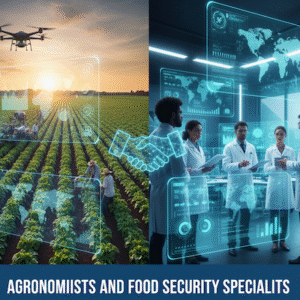
As global populations grow and climate change impacts agriculture, food security will become one of the most critical challenges of the next decade. While AI and automation handle data analysis and crop modeling, the ability to ensure sustainable food production, manage supply chains, and respond to environmental risks remains a uniquely human responsibility. Agronomists and food security specialists are poised to play a central role in feeding the world, making them highly resilient to AI disruption.
Who Are They?
Agronomists focus on crop production, soil management, and sustainable agricultural practices. Food security specialists analyze supply chains, monitor risks from climate change, and develop strategies to ensure that communities have consistent access to safe and nutritious food. Together, these roles combine technical expertise with critical decision-making under uncertainty.
Career Path and Education
Entering this field typically requires a degree in agronomy, agricultural sciences, or food systems management. Advanced roles often demand a master’s degree in agricultural economics, sustainable agriculture, or food policy. Certifications in sustainable farming, precision agriculture, and risk management further enhance employability.
Market Demand
The demand for agronomists and food security specialists is rising due to climate volatility, global population growth, and geopolitical concerns over food supply. Governments, NGOs, and private agricultural firms are actively seeking experts to design resilient food systems.
Future Outlook
Over the next 5–10 years, agronomists and food security specialists will increasingly integrate digital tools such as AI-based crop monitoring, satellite imagery, and predictive analytics. However, critical decision-making about resource allocation, crisis management, and adaptation strategies will remain human-led. As food becomes a strategic resource, these professionals will gain influence comparable to high-level policymakers or corporate executives in other sectors.