Post-Shutdown America: Trump’s Crypto Vision Begins to Materialize
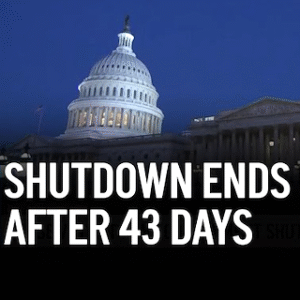
The 2025 government shutdown exposed deep vulnerabilities in the U.S. economic engine—halting federal operations, freezing macro data, and stalling credit pipelines. But as the system restarts, a more strategic transformation is underway. President Donald Trump’s long-declared ambition to position the United States as the global leader in crypto regulation is no longer rhetoric—it’s becoming reality. The signing of the GENIUS Act marks a foundational shift, placing stablecoins under formal banking oversight and signaling a new era of digital asset governance.
Economic Recovery
Economic Recovery Under Uncertainty
- The shutdown’s drag on GDP is expected to partially rebound, but fragile sectors face delayed recovery.
- The Federal Reserve re-enters policy calibration with limited visibility due to frozen macroeconomic data.
- Credit markets remain cautious, tightening standards for SMBs and consumer lending.
- Fiscal policy remains fragmented—temporary funding restored, but long-term budget alignment unresolved.
GENIUS Act and Stablecoin Regulation
The GENIUS Act and Stablecoin Regulation
- The GENIUS Act formalizes stablecoin oversight under banking regulators, removing SEC/CFTC ambiguity.
- Issuers are incentivized to hold U.S. Treasuries, reinforcing dollar dominance in digital settlements.
- Compliance standards now match traditional finance—AML/KYC integration becomes mandatory.
- U.S. becomes a stablecoin liquidity hub, attracting institutional capital and fintech partnerships.
- International projects face alignment pressure or exclusion from dollar-denominated rails.
Summary
The shutdown may have paused the economy, but it accelerated a regulatory pivot. With the GENIUS Act now law, the U.S. is building a compliant, scalable framework for stablecoins and digital finance—exactly as Trump envisioned. America isn’t just catching up to crypto innovation; it’s setting the rules. From dollar-backed liquidity hubs to institutional-grade compliance, the U.S. is now the reference point for global digital asset regulation. The vision is clear, and the infrastructure is forming.