Urban Planners and Environmental Architects: Shaping Cities for the Future
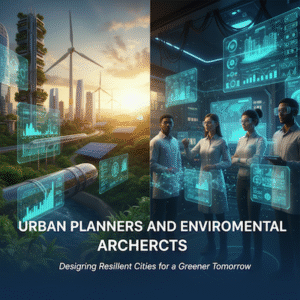
As technology races ahead, one truth remains constant: people need places to live, work, and thrive. Urban planners and environmental architects are at the forefront of designing spaces that balance functionality, sustainability, and quality of life. Unlike digital services, which depend entirely on infrastructure, human-centered environments are irreplaceable. In the coming decades, smart cities and eco-friendly districts will become vital, making these specialists key players in shaping the future.
Who Are They?
Urban planners and environmental architects focus on creating livable and sustainable cities. Their work includes zoning, transport design, public spaces, ecological housing, and green infrastructure. They integrate social, cultural, and environmental factors into city planning to ensure that people not only survive but also live in harmony with their surroundings.
Salary and Income Growth
URBAN PLANNERS SALARY
- Average annual income: $65,000 – $100,000 (U.S.).
- Senior-level planners in metropolitan areas can earn up to $120,000–$150,000.
- In Europe, typical salaries range from €45,000 – €80,000 annually.
- Projected demand growth: +12–18% over the next 5 years.
ENVIRONMENTAL ARCHITECTS SALARY
- Average annual income: $70,000 – $110,000 (U.S.).
- Top professionals in sustainable urban projects can exceed $150,000.
- In Europe, salaries range from €50,000 – €90,000 annually.
- Expected growth driven by smart cities and eco-friendly development: +15–20% over the next 5 years.
Advantages and Challenges
PROS
- Rising demand for sustainable and smart city development.
- Direct contribution to human living standards and ecological balance.
- Opportunities for innovation in architecture and infrastructure.
- Strong alignment with climate resilience and urban sustainability goals.
CONS
- Long education and licensing processes.
- High responsibility for public safety and environmental impact.
- Projects often limited by political, economic, and zoning restrictions.
- Potential stress from tight deadlines and conflicting stakeholders.
Career Path and Education
Becoming an urban planner or environmental architect typically requires a degree in urban studies, architecture, civil engineering, or environmental design. Many professionals also pursue specialized master’s degrees in smart city development, sustainable architecture, or ecological urbanism. Soft skills such as teamwork, negotiation, and cross-disciplinary collaboration are crucial since these experts often work with governments, developers, and communities.
Market Demand
The demand for urban planners and environmental architects is expected to grow steadily. Rapid urbanization, climate change, and the need for sustainable housing are driving this trend. Governments and private developers are seeking innovative solutions for energy efficiency, climate resilience, and smart mobility systems.
Future Outlook
In the next 5–10 years, the focus will be on sustainable cities, climate-neutral construction, and intelligent infrastructure. Experts who can merge technology with ecological thinking will be highly valued. This field is not just about designing buildings, but about shaping the way people experience life in future cities.