Introduction

Telegram founder Pavel Durov has announced the launch of Cocoon — a decentralized AI compute network built on the TON blockchain, designed to restore digital privacy and autonomy. The public beta is expected to go live in November 2025.
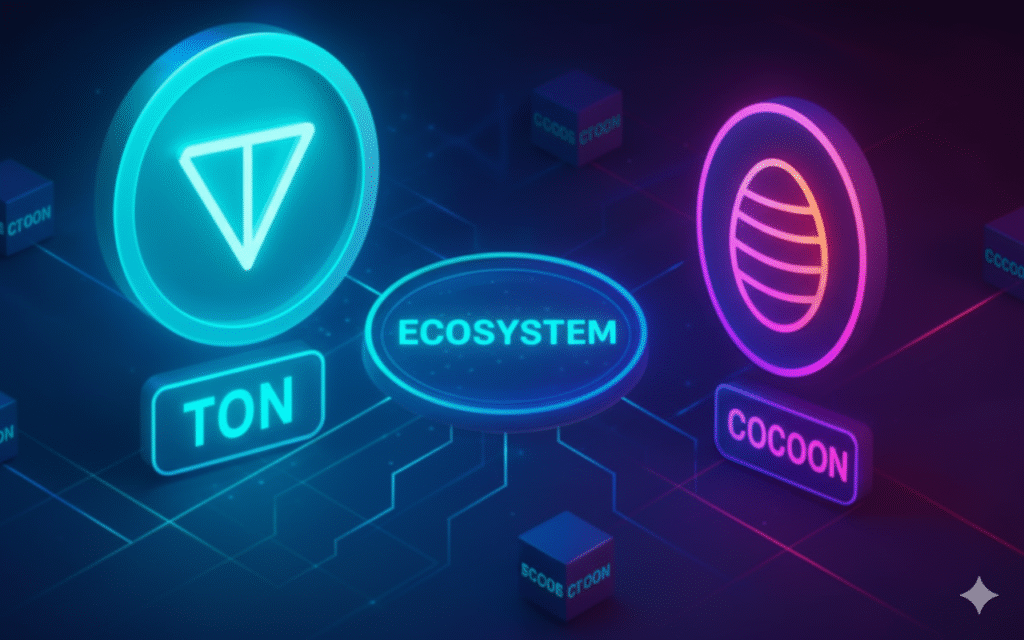
Cocoon highlights
Unveiled at the Blockchain Life 2025 forum in Dubai, Cocoon (Confidential Compute Open Network) is a decentralized infrastructure that merges artificial intelligence with blockchain technology. Built atop The Open Network (TON), Cocoon aims to provide private, secure AI computation without relying on centralized cloud providers like AWS or Azure.
Durov emphasized that the world is “moving in a strange direction” and that people are “losing digital freedoms.” He positioned Cocoon as a response — a way to preserve privacy through decentralized systems.
Blockchain mechanics
How Cocoon Works
- ➖ GPU contributors earn Toncoin (TON) by powering decentralized AI compute tasks
- ➖ Developers gain access to low-cost AI tools for building privacy-first applications
- ➖ Users interact with AI services anonymously, without exposing personal data
- ➖ Telegram acts as the primary demand engine, driving adoption across its ecosystem
- ➖ Cocoon integrates TON blockchain for secure, transparent task execution and rewards
- ➖ Designed to replace centralized cloud AI with community-powered infrastructure
Financial Context
Earlier this year, Telegram issued $1.7 billion in 5-year bonds at a 9% interest rate, maturing in June 2030. Over $950 million in bonds originally set to mature in March 2026 were exchanged for the new issuance, signaling strong investor confidence in Telegram’s long-term roadmap.
Summary
Cocoon represents a paradigm shift in AI infrastructure — moving away from centralized control toward community-powered compute layers. By integrating TON’s blockchain and incentivizing GPU contributors, Cocoon builds a scalable, privacy-first foundation for AI services.
With Telegram’s backing and TON’s growing ecosystem, Cocoon could become a cornerstone of Web3-native AI, offering developers and users alike a new model for secure, decentralized computation.